
A majority vote settles a question quickly and leaves a minority behind. The practices below, from Indigenous councils to modern self-managing teams, trade a little speed for decisions that boards, staff and community partners will actually carry out.
The sense of the meeting (Quaker practice, centuries old)
Quakers make decisions in a business meeting that opens and closes in silence. Each item gets pauses between contributions, and people usually speak once per topic. A clerk listens for the "sense of the meeting," writes the decision as a minute, and reads it aloud so the group can agree to the wording before moving on.
The part worth borrowing is the minute. When the decision is written and read back in the room, everyone hears the same thing, and misunderstandings surface while people are still together. Quakers in Ireland on decision-making
Deciding for the seventh generation (Haudenosaunee)
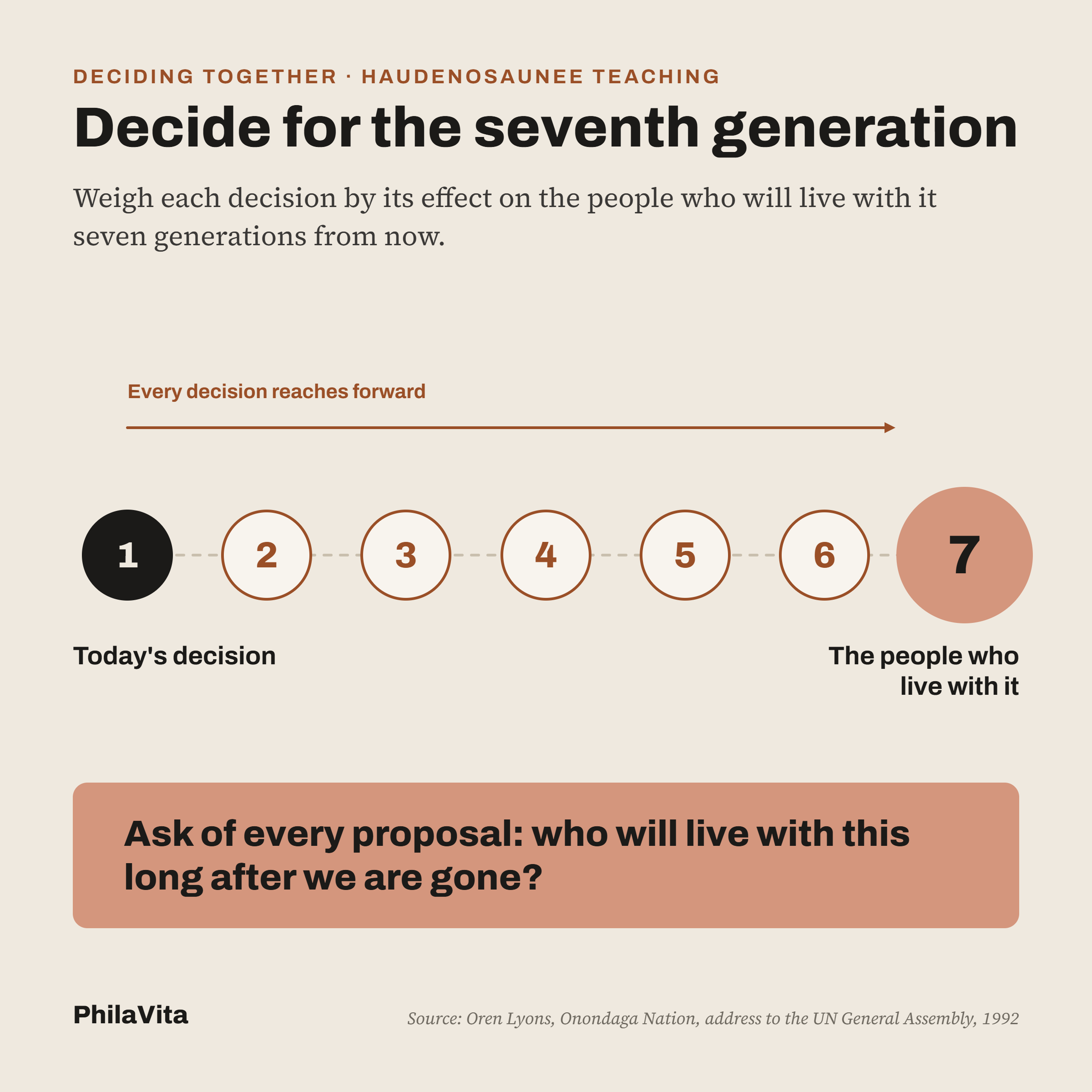
The Haudenosaunee, the Six Nations Confederacy, carry a teaching that leaders weigh every decision by its effect on people seven generations ahead. Oren Lyons, Faithkeeper and Chief of the Onondaga Nation, described it to the United Nations General Assembly in 1992 as an instruction to decide with compassion for generations not yet born. It asks a different question of every proposal: who will live with this long after we are gone? Oren Lyons's 1992 UN address
The peacemaking circle (Native American traditions)
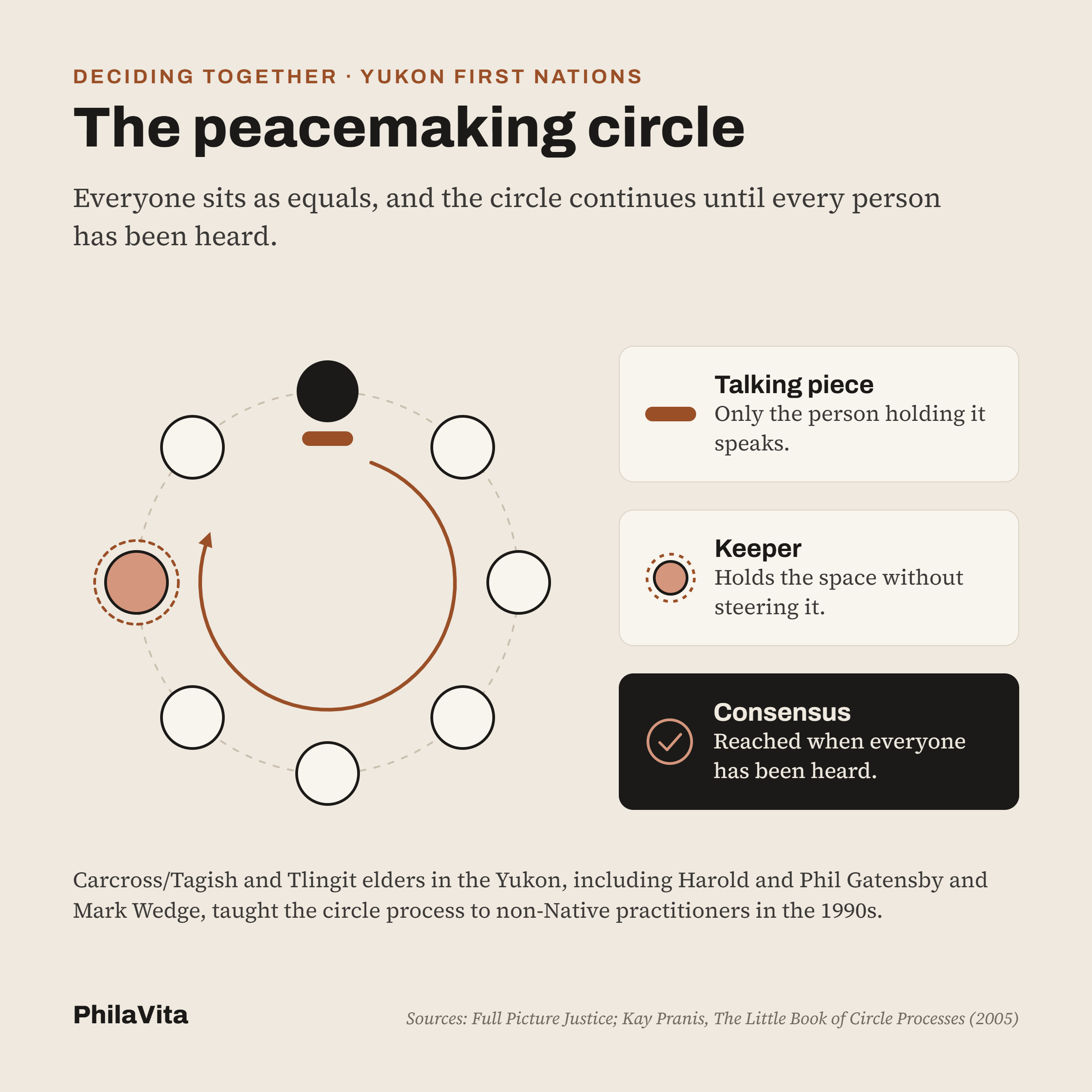
Peacemaking circles draw on Native American traditions of sitting together as equals. A talking piece passes around the circle, and only the person holding it speaks. A keeper holds the space without steering the conversation. Groups reach consensus when everyone has been heard, even if not everyone agrees on every point. Kay Pranis brought the practice into courts, schools and workplaces through The Little Book of Circle Processes. Beyond Intractability summary
The indaba (Zulu and Xhosa traditions, used at the Paris climate talks)
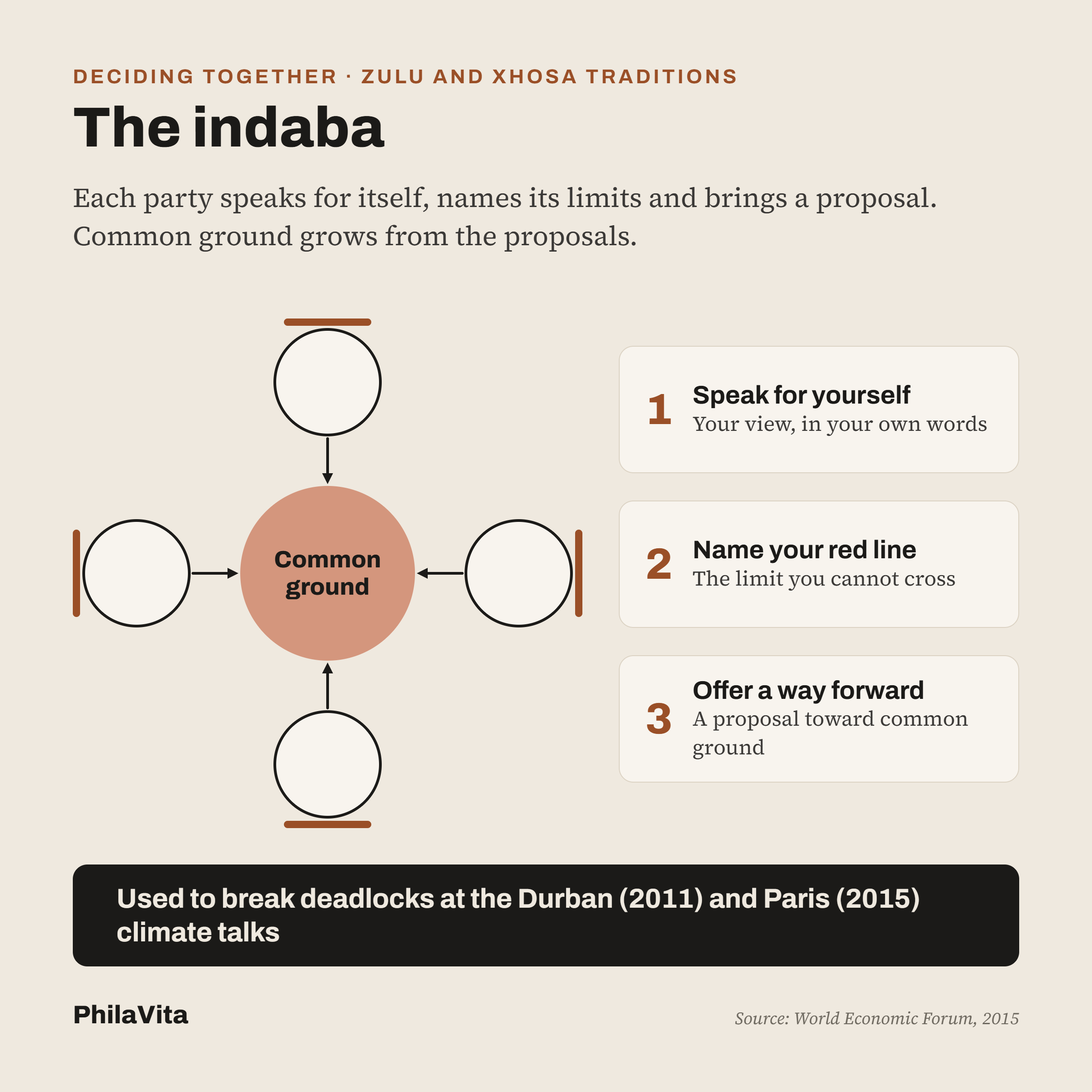
An indaba is a gathering practice from the Zulu and Xhosa peoples of southern Africa. Each party speaks for itself, names its red lines, and offers a proposal for common ground. South Africa brought the format to the 2011 climate talks in Durban, and it returned in Paris in 2015, where small indabas met at all hours to break deadlocks before 195 countries adopted the agreement. World Economic Forum
Consent, not consensus (sociocracy, 1970s)
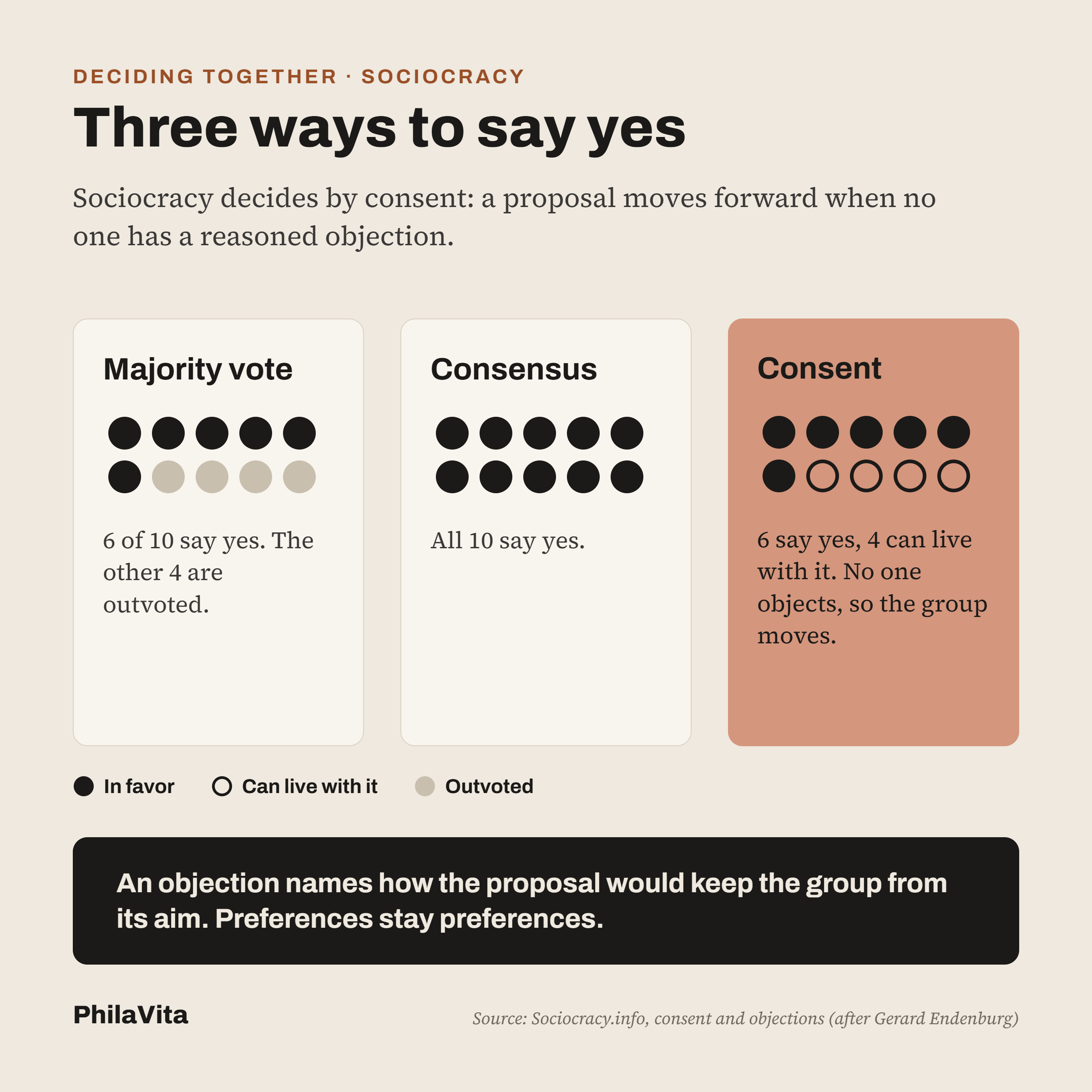
Dutch engineer Gerard Endenburg built a governance method for his electrical company in the 1960s and 1970s. Its core rule is consent: a proposal passes when no one has an objection. An objection has to show the proposal would keep the group from its aim; a preference does not count. Endenburg grew up around the Quaker tradition and kept its respect for every voice while making decisions faster. Holacracy later adopted the same rule. Sociocracy.info on consent and objections
The advice process (self-managing organizations, today)
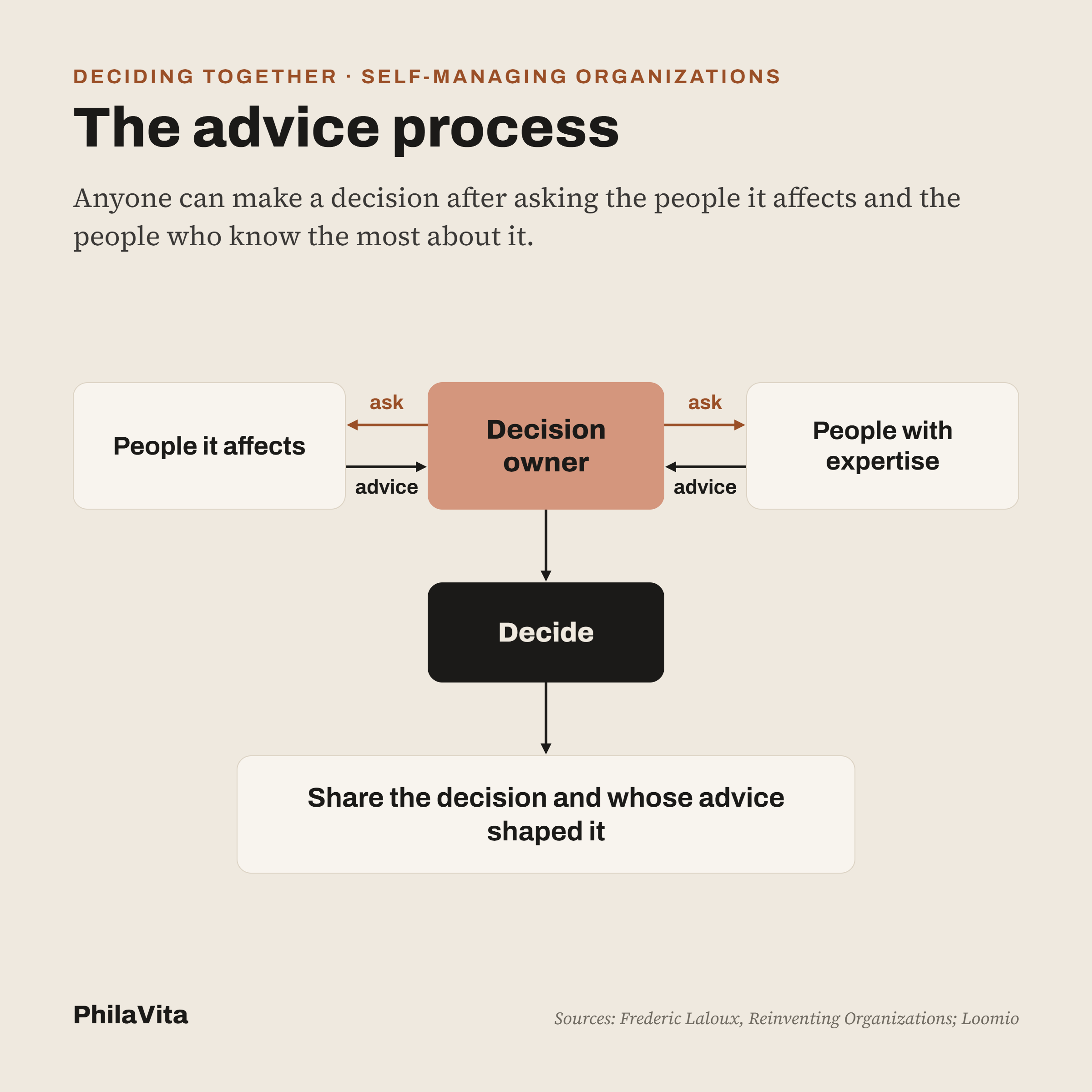
In the advice process, anyone can make any decision, as long as they first ask the people affected and the people with expertise. The decision-maker weighs the advice, decides, and shares what they decided and whose advice shaped it. Frederic Laloux popularized it in Reinventing Organizations, and tools like Loomio now build it into team software. Loomio's guide to the advice process
Citizens' assemblies (democratic innovation, 2016 onward)
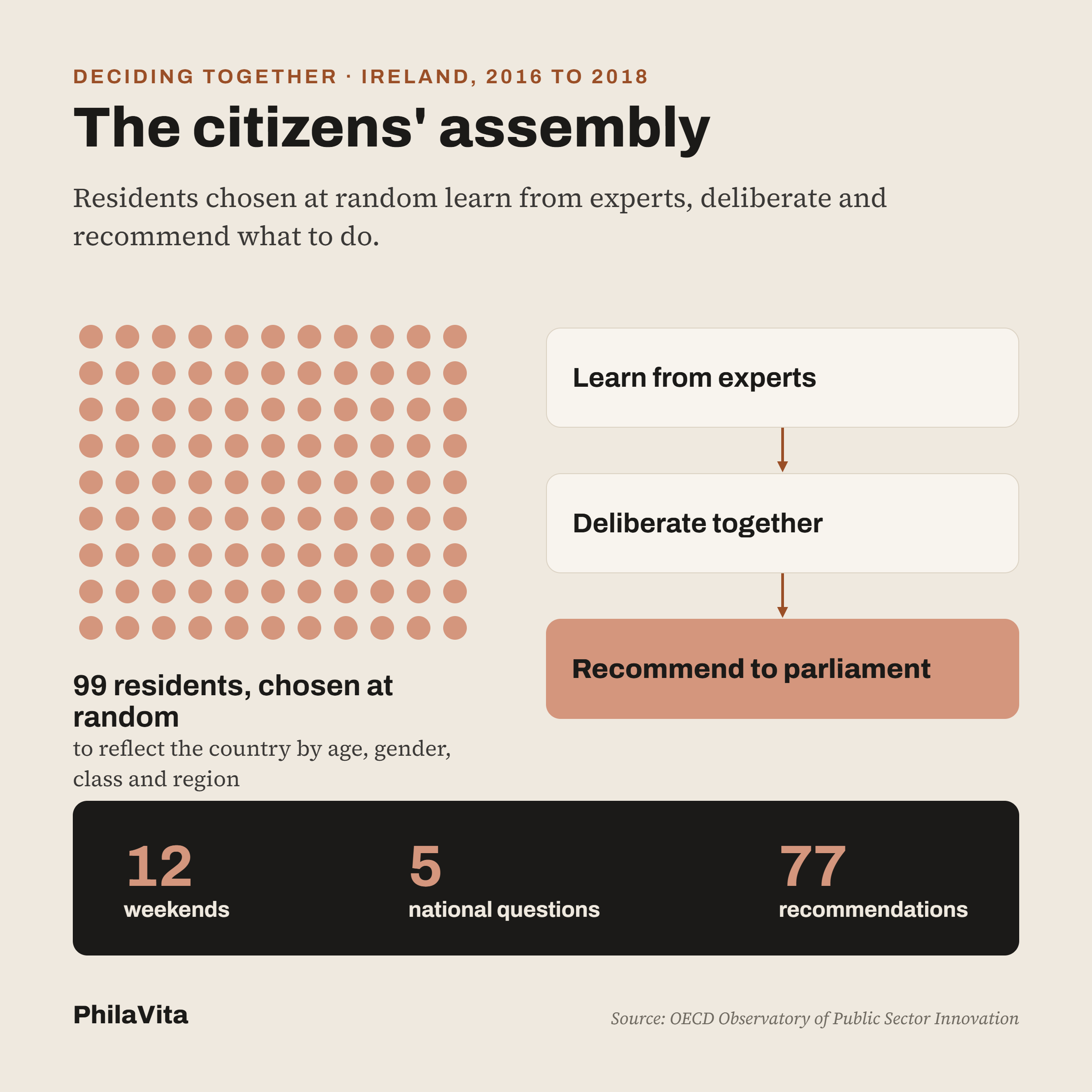
Ireland's Citizens' Assembly brought together 99 randomly selected residents, chosen to reflect the country by age, gender, class and region. Over 12 weekends between October 2016 and April 2018, they heard from experts, deliberated, and made 77 recommendations to parliament on topics from climate change to an ageing population. Ordinary people, given time and good information, worked through questions elected officials had struggled with for years. OECD Observatory of Public Sector Innovation
Try it with your team
Pick one decision coming up this month, such as a program change, a new partnership or a policy your board needs to adopt. Name who owns it, list who it affects, and give them a week to offer advice. At the meeting where you decide, open with one round of a talking piece, ask each person to name their red line, and close by having someone read the decision aloud as a written minute. If no one objects that it would undermine the team's goals, it stands.